0526: Do I Start Letrozole… or Not?
Apr 28, 2026
The Fear, The Side Effects… and What Actually Helps...
There's a moment a lot of breast cancer survivors describe to me.
You're sitting with a prescription in your hand...maybe Letrozole, Anastrozole, Exemestane, or Tamoxifen...and your mind starts doing what minds do.
"What if I take it and I can't handle the side effects?"
"What if I don't take it and I regret it forever?"
And underneath both of those questions, the one that doesn't always get said out loud:
"What if I take this… and I don't feel like myself anymore? And what if I don't take it… and the cancer comes back?"
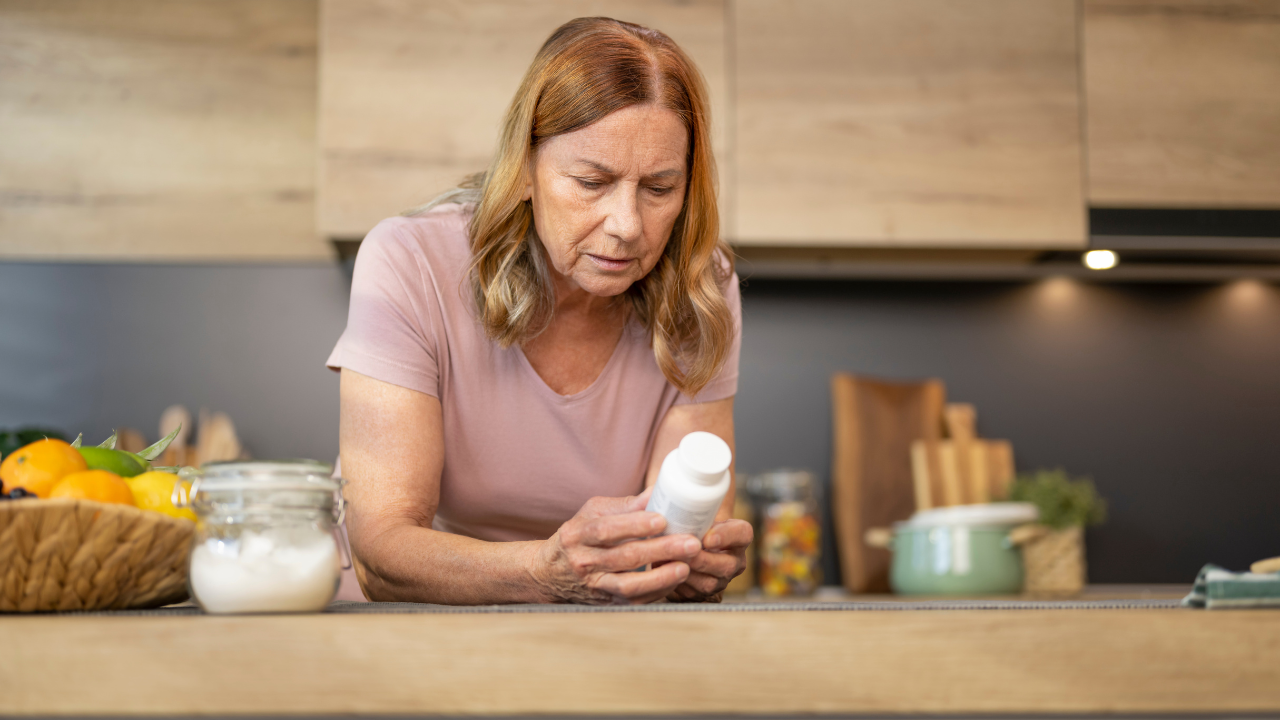
This is the part that can feel almost impossible to hold. Because you're not just deciding about a medication. You're holding both sides of something enormous, at the same time, in a body that has already been through a great deal.
And I want you to know...if that's where you are right now...you're not being dramatic. You're not overthinking it. You're doing something incredibly human.
You're trying to keep yourself safe in a situation where safety feels very hard to find.
What You're Really Looking For
Then come the numbers. For many women, these medications can reduce the risk of recurrence...often by a few percentage points. And while that might sound small on paper, when it's your life, it can feel very big indeed.
So your mind keeps running the loop. Only a few percent? Is that actually a lot? Is it enough to put up with the side effects? What if I say no… and I shouldn't have? What if I say yes… and I regret it?
Because what you're really looking for, underneath all of it, is certainty.
Something that says: if I do this, I'll be okay. If I don't, I'll still be okay.
And when no one can give you that...not your oncologist, not the research papers, not Google at 2am... it doesn't just feel confusing. It can leave you feeling like you're carrying the whole weight of the decision entirely on your own. Even when you're surrounded by people who love you.
“If I do this… I’ll be okay.”
“If I don’t… I’ll still be okay.”
You’re Body Isn't Starting From Neutral
Here's something I want to gently name, because I think it changes everything about how we approach this.
This decision is landing in a body that has already been through the diagnosis, the appointments, the waiting, the fear, the treatment, the recovery, and the long, quiet attempt to "get back to normal."
Your nervous system has been holding all of that, plus often years of stress and hard seasons before the diagnosis too.
And what that can look like in real life... in your body, on an ordinary day ...is something like this:
You wake up and your body already feels heavy. A little stiff. Like it didn't fully reset overnight.
Your joints ache a little. Your hands feel tight in the morning. Your hips take a few extra steps to warm up.
That 3pm wave hits and everything suddenly feels harder than it should. Your sleep isn't restoring you, you're exhausted, but not deeply rested.
Brain fog settles in. You walk into a room and forget why. You lose your train of thought mid-sentence. Your mood sits closer to the surface...more irritable, more emotional, a little less like yourself.
Your body feels… sensitive. To stress. To noise. To decisions.
To everything.
And there's a background hum of: I just don't feel quite right.

You might be reading that and thinking:
"Wait… that sounds like the side effects I've been warned about."
And here's what I want you to understand... it can overlap.
Because many of those patterns are also what a body looks like when it has been under long-term stress. When the nervous system has been quietly braced, armored, and "on" for a very long time.
That's not a personal failing. It's what chronic stress and inflammation do to a body.
And it matters...because when a medication enters that environment, it isn't landing in neutral territory.
The Inflammation Piece No One Talks About
Inflammation isn't a scary word. In this context, I just mean the internal environment your body creates when it has been under sustained pressure for a long time.
When your system has been "on" ...braced, reactive, always half-waiting for the next difficult thing... it can create conditions where everything feels more sensitive, more reactive, slower to recover, and harder to settle.
So when you read about side effects like fatigue, joint pain, brain fog, and disrupted sleep... it can feel like these are coming entirely from the medication.
And sometimes they are.
But often:
"Your body isn't just responding to the medication. It's responding to everything it's been through."
And the medication can amplify what was already there. That fatigue feels deeper. The stiffness lasts longer. The brain fog feels more frustrating. And it can quickly spiral into: See, I knew this was going to be hard.
But what if part of what you're feeling isn't just the medication alone? What if it's the environment your body is receiving it in?
Because those are two very different problems and they call for two very different responses.
It's not just the medication. It's the environment.
I was on Letrozole for eight years. And early on, I did everything I thought I was supposed to do. I ate well. I moved my body. I pushed through.
And I still remember standing in the kitchen thinking: I'm doing all the right things. So why doesn't this feel better? What is wrong with me?
The answer, it turned out, wasn't that I was doing the wrong things. It was the order I was trying to do them in.
"It felt like pressing the accelerator with the parking brake still on."
More effort wasn't the answer.
More discipline wasn't the answer.
What I needed was to release something first...before I could move forward with any of it.
And when I stopped asking "what else can I add?" and started asking "what can I let go of first?" that's when things genuinely began to shift.

The Order That Actually Helps
Most of us after treatment go straight to action.
I need to eat better, remove sugar and alcohol. I need to exercise more. I need to detox my house. I need to do this right.
And those things matter, 100%...I'm not saying they don't.
But if you're stressing about doing them, adding pressure and guilt and overwhelm to a system that's already stretched thin... you might be adding to the very load you're trying to reduce.
"You're not doing it wrong.
But you might be doing it in the wrong order."
Instead of pushing harder first, what if we started here:
👉 Helping your body feel safe
👉 Reducing pressure, not adding to it
👉 Creating genuine space to exhale
When we do that, we're not changing what the medication does. But we are changing the environment your body is receiving it in.
We're taking the parking brake off before we press the accelerator. And that changes everything.
A moment I keep thinking about
A Thrivership School member shared that every morning she'd sit with the pill in her hand. Just pausing there. Feeling the weight of it.
"I feel like I should be grateful," she said. "But I don't feel okay."
Over time, as she began to change the order...safety first, softness first, action last... something shifted inside her. Not overnight. Not dramatically. But quietly and for real.
"I didn't realize how much I was holding… until I felt a moment where I wasn't."
And eventually, the way she held the medication shifted too. Not "I have to take this." But: "This is one of the ways I'm taking care of myself."
I used to do something similar. I'd take mine and quietly say: thank you for helping to keep me safe. It sounds small. But there is something in that small act of choosing... rather than enduring...that your nervous system can feel.
What It Looks Like When It Shifts (In Real Life)

It's not a huge moment, it happens gradually...
It's the ordinary Tuesday afternoon when you realize you've been standing in the kitchen just… making dinner. No inner battle. No negotiating with your own exhaustion. No voice in the background listing everything you haven't done yet. Just you, in your kitchen, making dinner. And it feels almost shockingly normal.
It's the walk you took...not because you forced yourself, not because you told yourself you had to...but because your body actually wanted to move. And you went. And it felt good.
It's sitting with a cup of tea and realising, somewhere in the middle of it, that you're actually calm. Not performing calm. Not white-knuckling your way through calm. Actually, quietly, in your body, calm.
It's laughing at something genuinely funny and not feeling guilty about it a second later.
It's a morning that doesn't start with dread.
These moments don't announce themselves. They don't come with a certificate or a finish line. They just quietly arrive, and when they do, you realize something has changed underneath.
"Your body has begun to exhale.
And life, ordinary beautiful life, has started to come back."
That is what we're working toward. Not pushing you to a better version of yourself.
But, simply returning you to yourself.
What I Want to Leave You With
Will any of this guarantee a particular outcome? I wish I could say yes. I really do.
But what we do know is that inflammation is the ROOT CAUSE of all serious disease..including cancer, and a body held in chronic stress isn't where we feel our best and when we begin to gently, consistently shift that, we change the conditions your body is living in every single day.
That matters for how you feel.
It matters for how you heal.
And it matters for how you show up in your own life.
The fear softens.
The side effects feel clearer to navigate.
The decision... whatever it is...feels less like something happening to you and more like a decision you're making for yourself.
You don't need to push harder to get your life back.
You need to feel safe enough to exhale.
Safety first. Choice always. Action later. 💛
If you'd like a free place to exhale and feel understood, not coached, just genuinely held, I'd love to see you at the Strong & Supported Circle.
It's a free monthly gathering for breast cancer survivors, and the kettle is always on. ☕
👉 Find the next date and join us here
☕️ A gentle note:
Everything I share here comes from my own experience, personal research, and education as a holistic health coach. It’s offered with care to support you...but it’s not medical advice, and it’s not intended to guide you toward or away from any specific decision.
You and your medical team know your body and your situation best. I truly believe you are the only one who can decide what feels right for you and I deeply respect whatever decision you make.
This space is simply here to help you feel informed, supported, and a little less alone as you navigate your choices.
Always check in with your healthcare team when making decisions about your care.